Dayas Essence
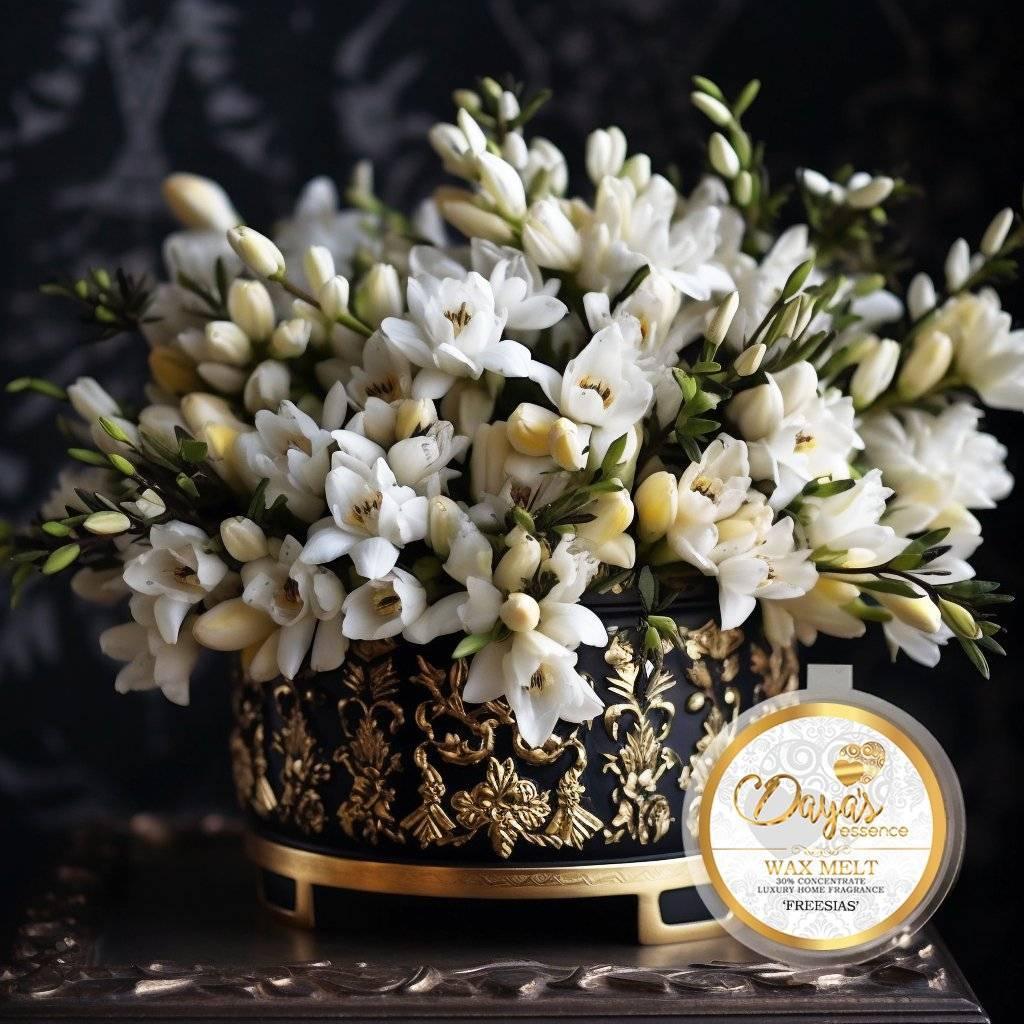
Floral scented wax melts UK – FREESIAS : A Floral Escape
301 in stock
Couldn't load pickup availability
Product Description
Floral Scented Wax Melts UK: FREESIAS – No Sneezes, Just A Stunning Scent!
It started innocently enough: I’ll just tidy under the stairs—won’t take me long.
Famous last words, right?
Before you knew it, you were knee-deep in a full-blown decluttering marathon.
First, the kitchen—why do you own three can openers and you noticed you also can’t find the lids for any Tupperware containers! Then the living room—you found a remote for a TV you no longer own, and let’s not even discuss the crumbs lurking under the sofa cushions.
By the time you hit the cupboard under the stairs, you were flustered, surrounded by piles of “I’ll deal with that later” chaos, and staring at the mess wondering, How did it come to this?
Enter Freesias Wax Melt, the unsung hero of spring cleans everywhere.
With a 30% fragrance load (that’s three times the usual dose), this isn’t just a wax melt—it’s your secret weapon for turning “I give up” into “I’ve got this!”
One of the best selling wax melt fragrances, it fills your home with a scent so uplifting, it makes even the most chaotic clean-out feel (almost) bearable.
From the moment it melts, this wax springs into action. Unlike those strong scented candles that barely last through half a playlist, Freesias Wax Melt delivers the best long lasting home fragrance designed to stick with you through the madness.
The uplifting floral fragrance spreads through every corner of the house, transforming your kitchen into a haven of calm, your living room into a space you actually want to sit in, and the under-stairs cupboard into something you don’t dread opening.
As the heart notes of freesias and delicate florals fill the air, you’ll start to feel like you’ve got it together—even if the junk drawer in the kitchen still refuses to surrender.
The comforting, grounding base notes of warm woods and soft musk take over, wrapping you up in a cocoon of calm just when you’re ready to call it quits.
Crafted with the best wax for wax melts, these beauties don’t just mask the chaos—they turn your home into a sanctuary (even if there’s still a pile of unmatched lids mocking you from the counter).
But here’s where Freesias Wax Melt really shines: It’s built to last.
With a 30% fragrance load, you’ll get over 30 hours of glorious, super strong wax melts performance, outlasting even the most ambitious decluttering session.
It’s no wonder this is one of the strongest smelling wax melts solutions for anyone tackling the “it’ll not take long” cleaning myth.
So, whether you’re deep in the trenches of a full-day clear-out or just want your home to smell amazing after a whirlwind of activity, these wax melts UK are your go-to solution. With their wax melts strong formula, floral scented wax melts UK fragrance, and long-lasting charm, they’re here to rescue your sanity and your senses.
Pop one into your warmer, sit back, and enjoy a moment of peace—you’ve earned it.
Just don’t be surprised when you start melting these for fun, no cleaning required (we won’t judge).
Click Add to Cart now and treat yourself to the fragrance your home deserves!
Fragrance Notes - Your Floral Escape:
Top Notes: Fresh citrus, green florals
Imagine a burst of crisp citrus zest blended with green, leafy florals—it’s like throwing open the windows on a bright morning, with a lively “let’s get cosy” vibe that’s just the invitation you need to unwind.
Heart Notes: Freesias, floral bouquet
A blooming bouquet of freesias and fresh florals fills the air, creating a delicate yet joyful scent that instantly lifts any room. It’s pure floral bliss, adding a graceful touch that feels both refreshing and sophisticated.
Base Notes: Warm woods, soft musk
Grounding and warm, with a gentle hint of soft musk, this base wraps around you like your favourite oversized jumper. It’s the scent equivalent of sinking into your comfiest chair, bringing a long-lasting sense of calm and comfort.
Why Freesias Wax Melt Is a Must-Have:
Let me tell you, Freesias Wax Melt isn’t just another wax melt—it’s the one you’ll keep coming back to. Whether you’re shaking off a grey day or setting the tone for a quiet evening, it delivers exactly the vibe you need.
It’s the kind of product that makes you pause and think, Yep, that was a good decision.
Trust me, once you’ve tried it, you’ll wonder how your home ever did without it.
Frequently Asked Questions
What are some signs that my wax warmer is malfunctioning or overheating the wax?
If your wax warmer is malfunctioning or overheating, here are some key signs to watch out for, including specific points for electric and candle (tealight) burners:
Visible Vapour vs. Smoke: Wax melts should release fragrance particles as a light vapour, which is often invisible or appears as a faint mist.
This vapour carries the scent without producing visible smoke or a burnt smell. If you notice thick, dark smoke or a strong burnt odour, it could mean the warmer is overheating. Unlike vapour, smoke indicates overheating or burning, which signals a serious issue.
Discolouration or Rapid Wax Evaporation: If the wax changes colour or evaporates unusually quickly, this might mean the warmer is running too hot. Wax melts are designed to last several hours, so rapid scent loss or wax depletion can indicate a problem.
Hot-to-Touch Surface or Base: Warmers should be warm but not extremely hot. If the surface or base becomes uncomfortable to touch, it’s a sign of potential overheating, as warmers are typically built to maintain a moderate temperature.
Spitting or Bubbling Wax: Wax should melt smoothly without unusual reactions. If you see spitting, bubbling, or hear sizzling sounds, it’s likely that the warmer is too hot, which can affect both scent quality and safety.
Power Issues or Flickering Light (for electric warmers): Some electric warmers have indicator lights. If this light flickers or the warmer turns off unexpectedly, it may be due to an electrical issue.
Burner Dish Inspection: For candle (tealight) or electric wax burners, it’s important to inspect for any hairline cracks, as these can expand with heat, potentially causing wax to leak. Also, check if the wax is bubbling excessively while melting; this can mean the flame is too close to the dish if using a tealight burner, causing it to overheat.
Wire Check (for Removable Dish Warmers): If your electric warmer has a removable dish, inspect the wires underneath for any signs of singeing or blackened areas. This could indicate a wiring issue and poses a potential safety risk. If you notice damage, discontinue use and consider replacing the warmer.
If you observe any of these signs, unplug or extinguish the warmer, allow it to cool completely, and consider replacing it if the issues persist.
Being mindful of these indicators can help ensure safe and enjoyable fragrance use.
Are there certain wax melt scents that can repel insects naturally?
Yes, certain wax melt scents can naturally repel insects, but it's essential to consider the difference between fragrance oils and essential oils, especially if you have pets at home. Essential oils like citronella, eucalyptus, peppermint, and lemongrass contain natural compounds that are known to repel insects effectively.
However, these oils can also pose risks to pets:
Citronella: Known for repelling mosquitoes, citronella is toxic to pets, particularly dogs, and can cause skin irritation, respiratory issues, and gastrointestinal upset if ingested.
Eucalyptus: Eucalyptus oil repels pests but is harmful to both cats and dogs. If ingested or inhaled in large amounts, it can cause symptoms like drooling, vomiting, diarrhoea, and respiratory irritation.
Peppermint: Peppermint oil is effective at keeping bugs away but can be toxic to pets, causing vomiting, diarrhoea, and lethargy. The strong aroma may also irritate their respiratory systems.
Lemongrass: Lemongrass oil, containing citral, can also be toxic to pets, causing symptoms like vomiting, diarrhoea, and lethargy if ingested.
On the other hand, fragrance oils are typically synthetic and are created to mimic certain scents without the full chemical makeup of essential oils.
While they may replicate the aroma of insect-repelling oils, fragrance oils generally lack the natural insect-repelling properties of essential oils.
However, they are often safer for use around pets, as they don’t contain the concentrated compounds that make essential oils potentially harmful.
If you have pets, it’s wise to avoid using wax melts with natural insect-repelling essential oils or to use them in well-ventilated areas inaccessible to pets.
Alternatively, choosing wax melts with synthetic fragrance oils that have similar scents can offer a pleasant aroma without the same risk. Prioritising your pet’s safety is key, as even indirect exposure to certain essential oils can affect their health.
How does the fragrance intensity of wax melts compare to plug-in air fresheners?
When comparing the fragrance intensity of wax melts to plug-in air fresheners, each has unique strengths and provides a different scent experience.
Wax Melts: Wax melts tend to deliver a stronger, more immersive scent. As the wax is warmed, it releases a high concentration of fragrance, quickly filling a room with a deep, lasting scent. Unlike plug-ins, wax melts allow you to customise the intensity by using more or fewer melts, so you can easily adjust the scent strength based on your preferences.
Each session can last several hours, creating a noticeable, welcoming fragrance that feels natural and layered.
Plug-In Air Fresheners: Plug-ins, in contrast, are designed for a subtle, continuous scent. They slowly release fragrance over time, maintaining a consistent background aroma but without the same immediate impact.
While convenient, plug-ins generally don’t have the same depth or intensity as wax melts and are best suited for those who prefer a gentle, steady scent in the background rather than a more dynamic fragrance experience.
In short, wax melts are ideal if you’re looking for a rich, customisable scent that fills the room quickly and lasts.
Plug-ins work well for maintaining a mild, consistent fragrance with minimal effort. If you’re interested in trying out a stronger, longer-lasting option, Dayas Essence offers wax melts designed with 3 times more fragrance oil used for those who crave a more intense fragrance.
Explore our range of strong wax melts, TRIPLE oil loaded wax melts that really do last!
Additional Info▼
CLP:

Customer Reviews
Presented In
Presented in a 1oz tub (4.5cm width x 2.6cm height), this wax melt might be small, but it's definitely mighty. Your senses deserve this indulgence, so try it today and hit that buy button!
Size Comparison


Why Choose Our Wax Melts?
| Triple Fragrance Loaded for an Intense Aroma: All our wax melts have three times the fragrance poured into each melt, equating to a 30% concentrated fragrance load (compared to 10% in other brands). |
| Long-Lasting Scent: Get a minimum of 30 hours of burn time with an electric warmer (full tub) or 20 hours with a candle burner. |
| Phthalate & Carcinogen Free: No harmful nasties, so you can breathe easy. |
| Fully compliant: With HSE GB CLP and IFRA regulations. |
|
YOUR SENSES DESERVE THIS INDULGENCE. TRY TODAY! |
Have Questions?
Visit our FAQ page for answers to common questions about our products.
-
Regular price £2.75 GBPRegular price
-
Regular price £2.75 GBPRegular price
-
Regular price £2.75 GBPRegular price
-
Regular price £2.75 GBPRegular price